A Christian Pilgrimage to Jordan from Pakistan: Where to Go and How to Plan
For Christians in Pakistan, a pilgrimage to the Holy Land has long seemed out of reach: a Pakistani passport is not valid for Israel, which closes the road to Jerusalem and Bethlehem. But the Jordan River has two banks. On the eastern one lie the place where Christian tradition says John baptised Jesus, the mountain from which Moses saw the Promised Land, and the hills of Gilead where Elijah was born. This guide covers the sites, the seasons and the practical steps, from the visa to Sunday worship.
Why Jordan
Jordan holds a remarkable share of the biblical story. The Gospel of John places John the Baptist's ministry “beyond Jordan, where John was baptizing” (John 1:28). Deuteronomy closes on Mount Nebo. Elijah was “the Tishbite, who was of the inhabitants of Gilead” (1 Kings 17:1), and he crossed the river to its eastern side before he was taken up into heaven (2 Kings 2).
For the Jubilee of 2000, five places in Jordan were designated as Christian pilgrimage sites: the Baptism Site, Mount Nebo, Tell Mar Elias, Our Lady of the Mountain at Anjara and Machaerus. Three popes — John Paul II in 2000, Benedict XVI in 2009 and Francis in 2014 — have prayed at the Baptism Site, and UNESCO added it to the World Heritage List in 2015.
The Baptism Site and Elijah's Hill
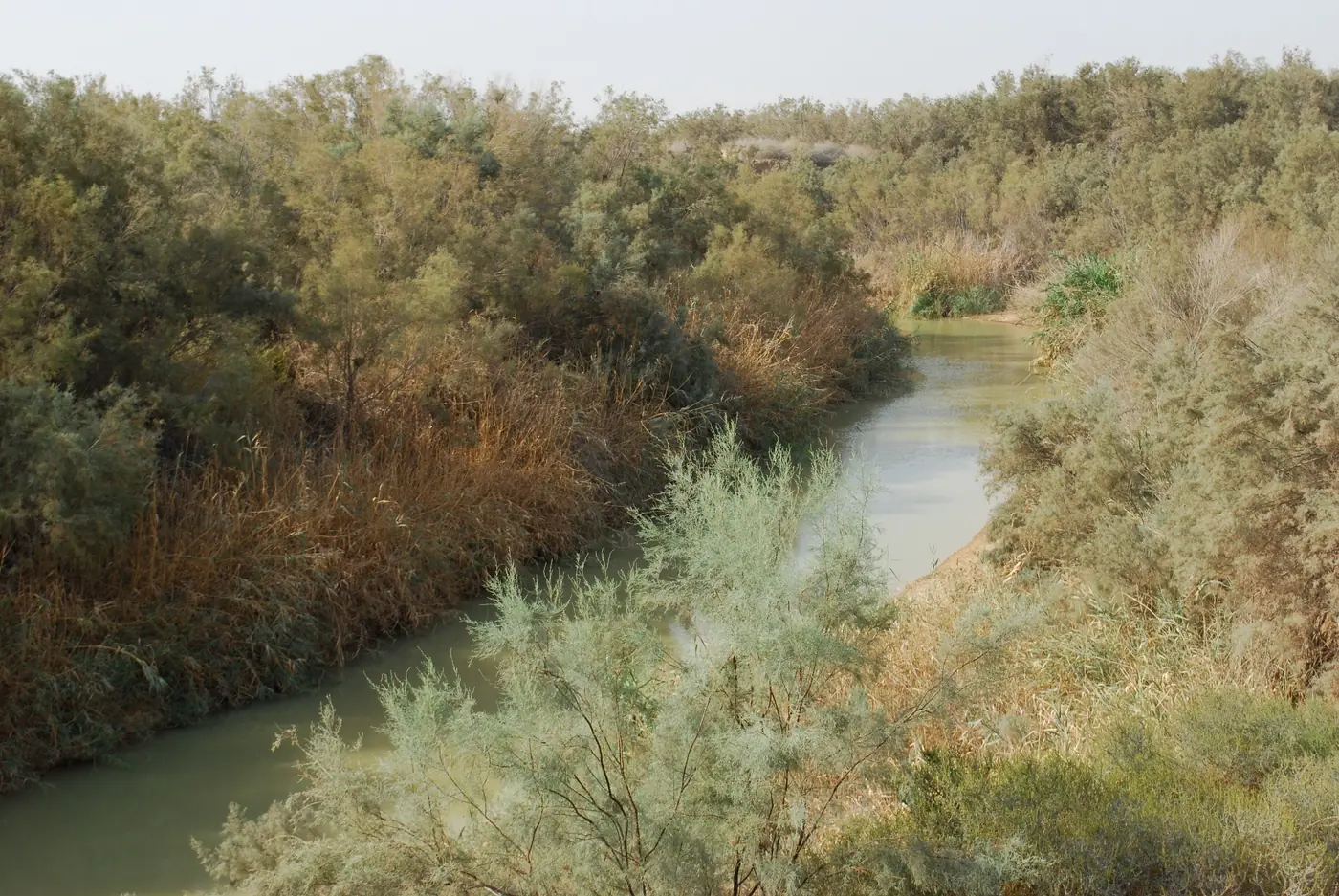
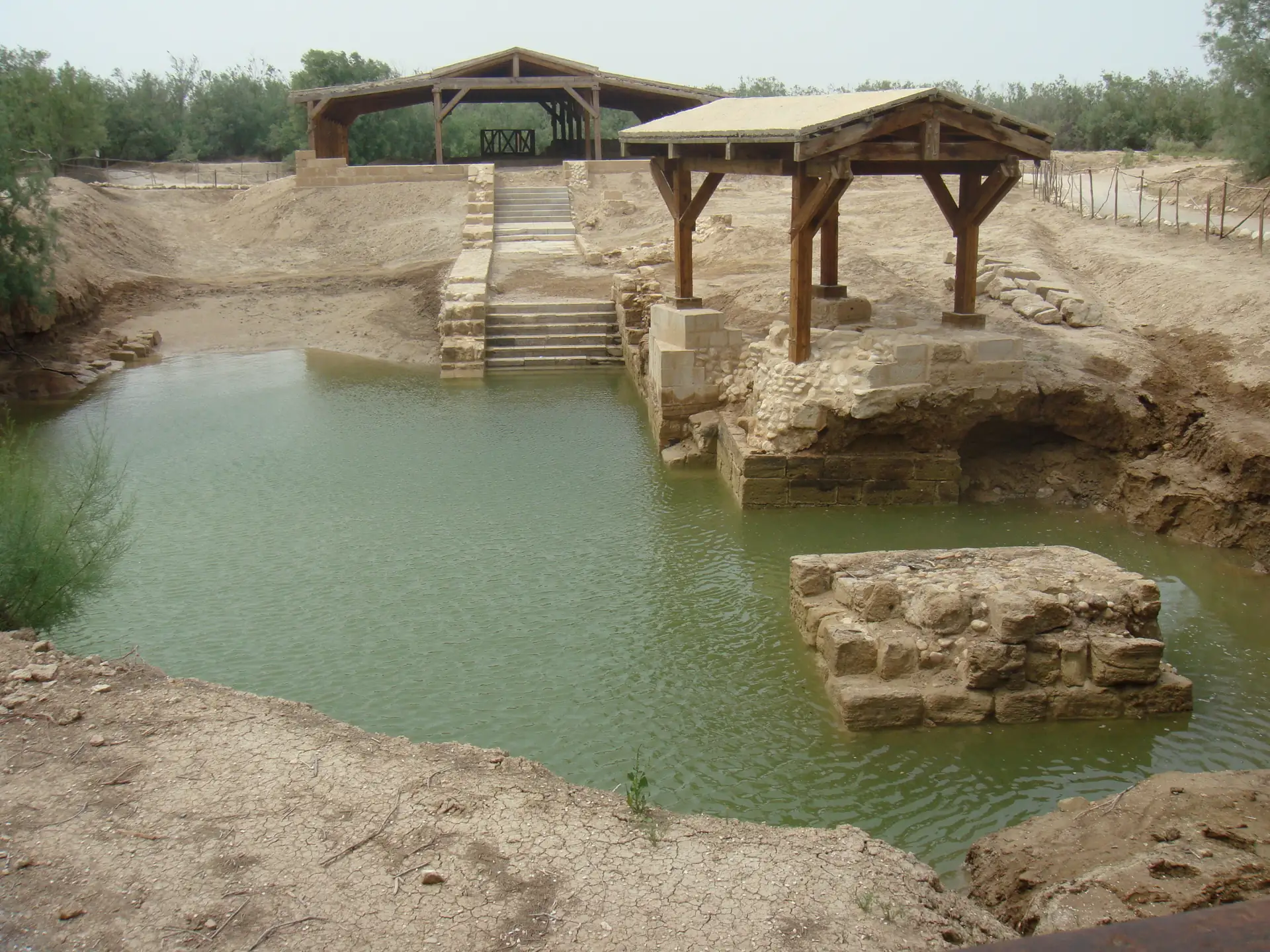
Bethany Beyond the Jordan lies on the river's east bank, about nine kilometres north of the Dead Sea and under an hour's drive from Amman. A visit begins at the visitor centre, from which a shuttle and a guide take you through the site: the foundations of Byzantine churches and baptism pools, Elijah's Hill (Tell el-Kharrar), and finally the river itself.
The river steps are the one place in Jordan where visitors can reach the Jordan. Pilgrims touch the water, pray, and often fill a small bottle to carry home. Go early: the site lies far below sea level and its paths are open to the sun, so a morning visit is comfortable in spring and autumn and the only sensible time in summer.
Mount Nebo and Madaba
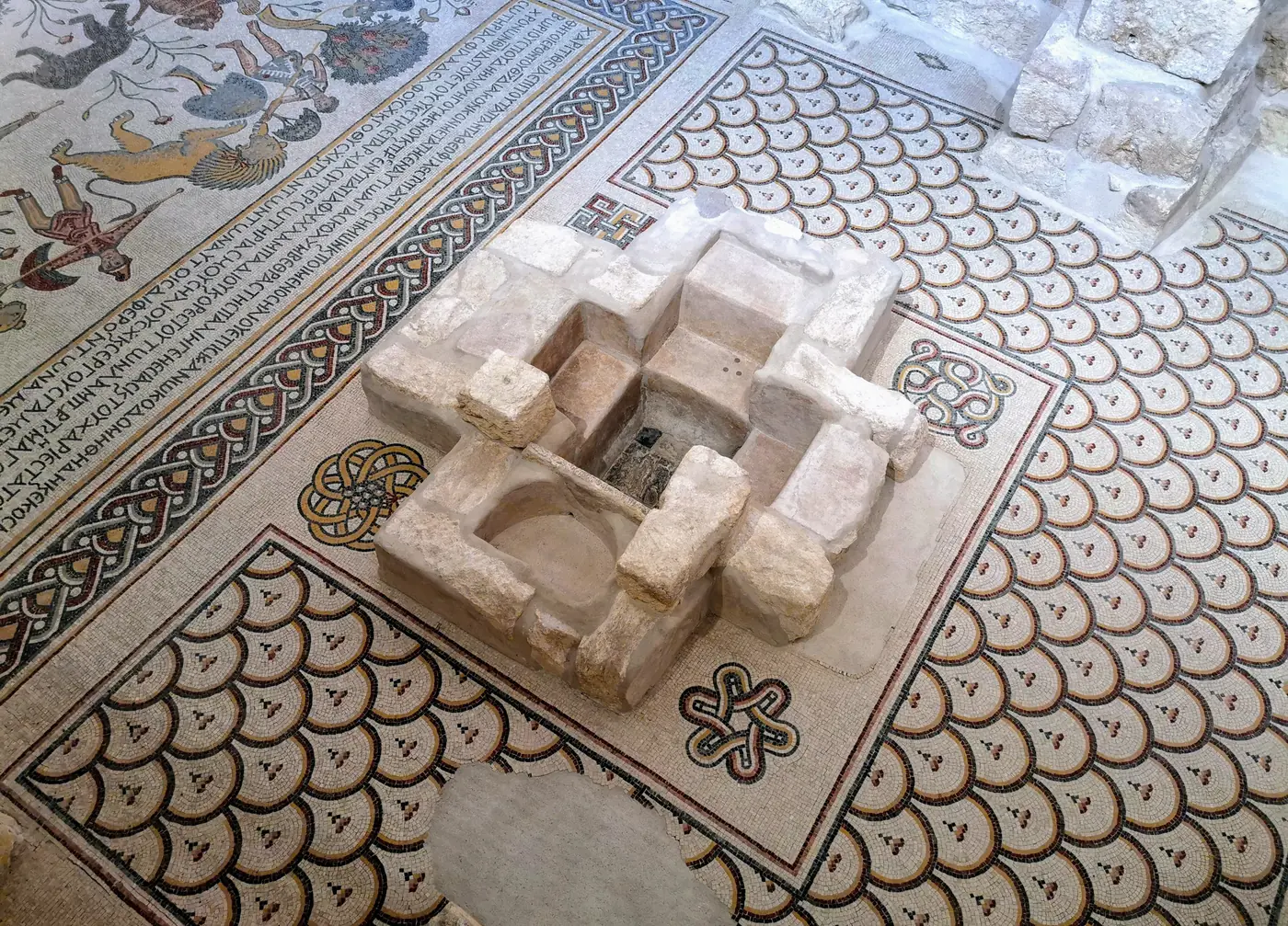
Fifteen minutes apart, these two belong together. From Mount Nebo, Deuteronomy tells, “the LORD shewed him all the land” that Moses would not enter (Deuteronomy 34:1). The Franciscans have kept the summit since 1932, and their Memorial of Moses, reopened in 2016, shelters some of the finest Byzantine mosaics in the country. The view runs across the Jordan Valley to the Dead Sea.
Madaba, a town with a long-established Christian community, is known for its mosaics. In the Greek Orthodox Church of St George lies the Madaba Map, a sixth-century mosaic and the oldest surviving map of the Holy Land: Jerusalem at its centre, the Jordan running into the Dead Sea, and the place of baptism marked beside the river. The town's Shrine of the Beheading of John the Baptist is a short walk away.
Machaerus, Tell Mar Elias and Anjara
South of Madaba, Herod's fortress of Machaerus stands on a hill above the Dead Sea. Mark's Gospel tells of John the Baptist's imprisonment and death at the order of Herod Antipas (Mark 6:17–29), and the historian Josephus places it here. The climb to the summit is short, and the sunset over the water is worth waiting for.
North of Amman, in the wooded hills of Gilead near Ajloun, tradition places Elijah's Tishbe at Tell Mar Elias, where the ruins of a large Byzantine church crown the hill. Nearby, at Anjara, the shrine of Our Lady of the Mountain marks the cave where tradition holds that Jesus, Mary and the disciples rested. Both combine naturally with Jerash, one of the cities of the Decapolis that Mark records Jesus passing through (Mark 7:31).
Adding Petra, Wadi Rum and the Dead Sea
Many pilgrims add two or three days in the south. The King's Highway — the road Moses asked to travel through Edom (Numbers 20:17) — leads past Kerak Castle to Petra, the rose-red Nabataean city, above which Jabal Haroun carries the traditional tomb of Aaron (Numbers 20:28). A night in a Wadi Rum desert camp and a last float in the Dead Sea round the journey off.
The visa from Pakistan
Pakistan is on Jordan's list of restricted nationalities. In practice the visa has to be approved before you travel: it cannot be bought on arrival, and the Jordan Pass, which covers the visa fee for many visitors, does not apply.
The application goes through a licensed Jordanian tour operator or the Embassy of Jordan in Islamabad. We prepare the documents with you and confirm the current requirements and timeline when you enquire. Apply well before buying non-refundable flights.
When to go and how to get there
Spring (March to May) and autumn (September to November) are the kindest seasons. Summer is very hot in the Jordan Valley and at the Dead Sea, and winter can bring cold, wet days in Amman and the hills of Gilead.
There are no direct flights from Pakistan. Most routes connect once, usually through a Gulf hub, into Queen Alia International Airport outside Amman, and we can book them from Lahore, Islamabad or Karachi with the rest of the trip.
Travelling as a church
Pilgrimages work best at a gentle pace, with time to read the passage at each site and to pray. Congregations can travel with their pastor or priest, and we plan the days around readings, quiet time and Sunday worship. Jordan's weekend is Friday and Saturday, but churches in Madaba and Amman hold Sunday services.
Dress modestly for churches and holy sites, with shoulders and knees covered, and bring a hat, water and comfortable shoes. Group size, dates and hotels are confirmed in a written quotation before anything is paid.
Plan this trip
Explore the destination and its ready-to-book tour, or message us to customise your itinerary.